Turnbull, George · p. 57
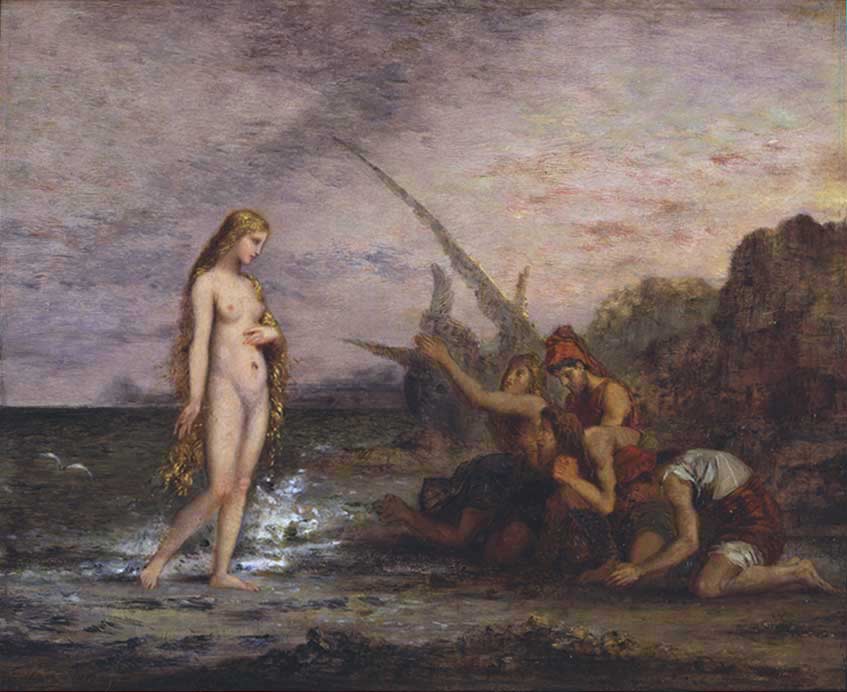
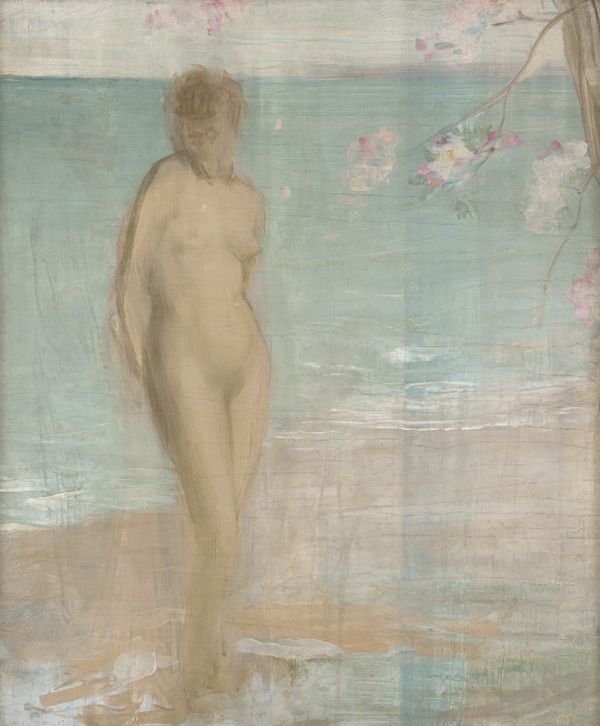
The most celebrated piece of that great master Apelles, was his Venus Anadyomenè, or Venus coming out of the seaVenerem exeuntem e mari D. Augustus dicavit in delubro patris Caesaris, quae anadyomene vocatur; versibus Graecis, tali opere dum laudatur, victo, sed illustrato: Cuius inferiorem partem corruptam qui reficeret non potuit reperiri. Verum ipsa iniuria cessit in gloriam artificis. Plin. ibid.. Lucian in his beautiful dialogue entitled, The images, where, in order to draw the portrait of a woman more charming than any he found existing, he borrows from all the best sculptors and painters their most masterly strokes, says, Euphranor shall paint her hair; Polygnotus her eye-brows, and the vermilion of her cheeks; but Apelles shall do all the rest of her body after the model of his Pancaste; that is to say, of his Venus which was done chiefly after the life, from Pancaste the Thessalian beauty, Alexander’s first mistress; whom he afterwards gave to Apelles upon his falling deeply in love with herAthenaeus, lib. 13. c. 6. says it was done after Phryne. Erat utique Phryne magis pulchra in iis partibus quae non videntur quamobrem haud facile fuit eam conspicere nudam: induebatur enim tunicam arcte carnes adstringentem neque publicis utebatur balneis. Frequentissimo tamen Eleusiniorum convenit feriatisque Neptuno diebus, in Graecorum omnium conspectu, deponens vestes et solvens comas, ingressa est mare: adeo ut Venerem e mari emergentem ad hoc etiam exemplum pinxerit Apelles.. This Venus was a consummate beauty; so perfect a piece, that, in Augustus’s time, this picture being then at Rome, and a little spoiled in some of the interior parts, no painter would adventure to repair it. It was in a like manner, with the greatest difficulty, that Carlo Maratti, as sweet and gracious as his pencil was, and as fine an idea of beauty as he had, was persuaded to retouch some parts of Raphael’s paintings in the little Farnese at Rome. Apelles had also begun another Venus, which not living to finish, no painter would ever undertake to complete; so elegant was the outlines and contours of this unfinished pieceVenerem Cois, superaturus etiam illam suam priorem. Invidit mors peracta parte, nec qui succederet operi ad praescripta lineamenta inventus est. Plin. 35. 17. Ad præscripta lineamenta, this properly signifies the contours in sculpture and painting. Tu videlicet solus vasis Corinthiis delectaris? — Tu operum lineamenta solertissime perspicis. Cic. in Ver. l. 4. So a poet contemporary with Pliny speaks:
Artificum veteres agnoscere ductus.
And a little afterwards:
Linea quæ veterem longe fateatur Achillem.
Stat. in Hercul. Lib. 4.. For that he had perfected the head, and upper part of the breast with admirable art Cicero tells usEpist. Ad Famil. Lib. I. Ep. 9. Nunc ut Apelles Veneris caput, et summa pectoris politissima arte perfecerit, reliquam partem corporis inchoatam reliquit..
The charming beauties are often celebrated by the poets:
Formosæ periere comæ: quas vellet Apollo,
Quas vellet capiti, Bacchus inesse suo.
Illis contulerim, quas quondam nuda Dione
Pingitur humenti sustinuisse manu. Ov. Am. l. 2. El. 14.
Again, Sic madidos siccat digitis Venus uda capillos,
Et modo maternis tecta videtur aquis. Trist. l. 2. 526.
Ovid there describes several pictures in the palace of Augustus.
Again, Ut Venus artificis labor et gloria Coi
Aequoreo madidas quae premit imbre comas. Ov. Ep. de Ponto, l. 4. Ep. I.
And there is an epigram of Ausonius on the same subject.
Emersam pelagi nuper genitalibus ondis
Cyprin Apellei cerne laboris opus;
Ut complexa manu madidos salis aequore crines
Humidulis spumas stringit utraque comis.
Jam tibi nos Crypri, Juno inquit et innuba Pallas,
Cedimus, et formae praemia deferimus. Aus. Ep. n. 104. In Ven. Anady.
And another in the Greek Epigrams by Antipater Sidonius; thus translated into Latin by Grotius:
Maternis primum de fluctibus emergentem
Cyprin Apellei cerne laboris opus:
Ut manibus mulcens respersos æquore crines,
De madidis spumam cogit abire comis,
Non tibi de forma posthac certabimus, ipsæ
Dicent, si videant, nata sororque Jovis. Anthol. l. 4. tit. 12.